
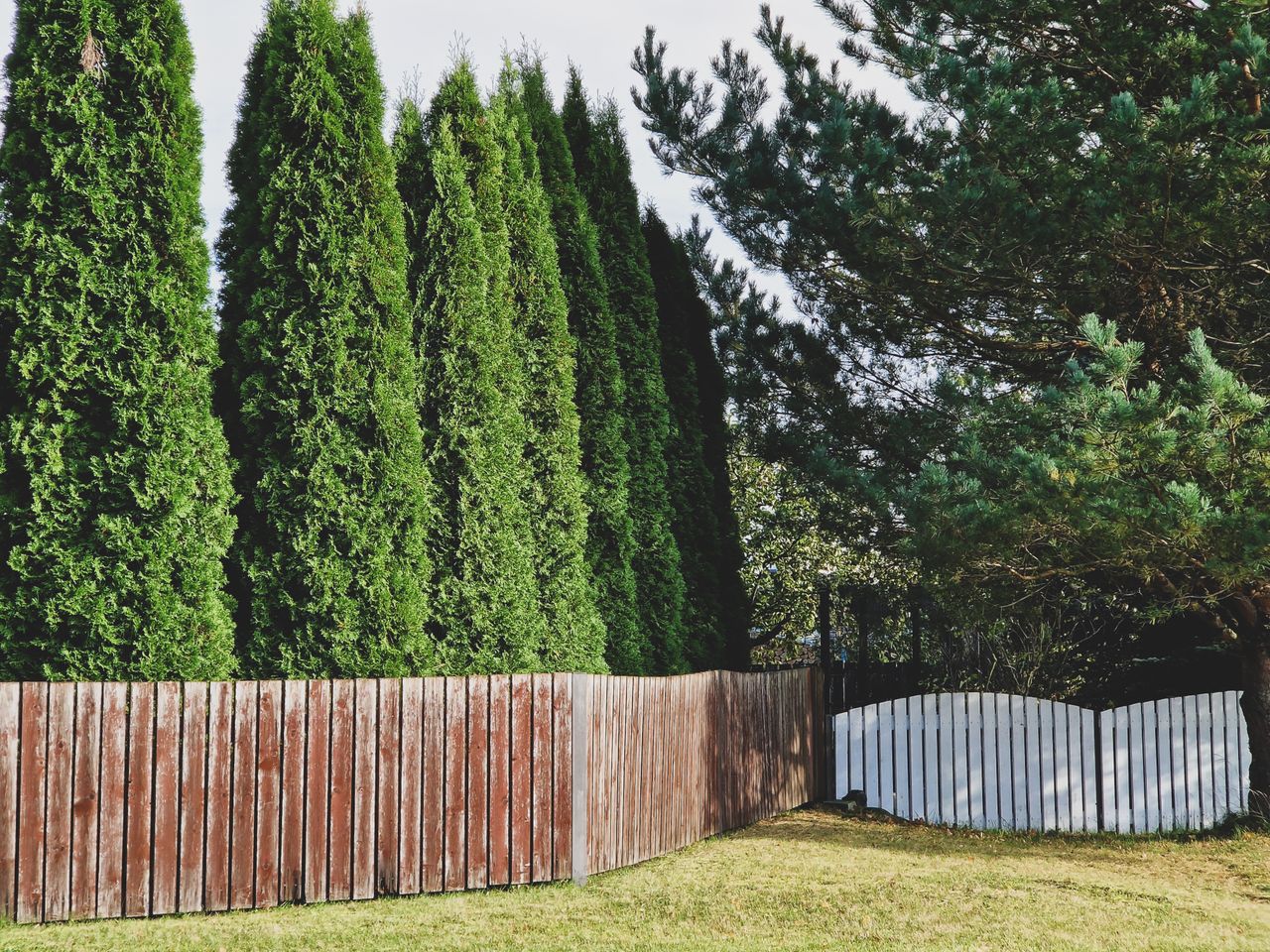
Every homeowner reaches that moment when the neighbors’ second-story addition suddenly has a clear view of the back patio, or the new development down the street brings headlights sweeping across the bedroom window at night. The instinct is to build a taller fence, but wood weathers, vinyl looks industrial, and neither grows softer with time. Trees do.
The catch is that most people picture privacy trees and immediately imagine ladders, loppers, and a Saturday spent fighting with branches that never stay where you want them. That’s a fair worry, because plenty of popular screening options demand constant shaping to look presentable. The good news is that a handful of species were practically designed to form a tall, dense wall on their own, with only occasional touch-ups required.
This comparison walks through the strongest low-maintenance candidates, weighs their trade-offs side by side, and helps you figure out which one actually fits your yard, your climate, and your patience level. Not every fast grower is low-effort, and not every low-effort tree grows fast enough to matter. The sweet spot is narrower than the marketing suggests.
Why Speed and Low Maintenance Rarely Come Together
Fast growth usually means weak wood, aggressive roots, or a tendency to outgrow its welcome within a decade. Think of poplars or willows: they shoot up quickly and then start dropping limbs, cracking driveways, or dying back in patches. On the other end, the tidy, slow, perfectly behaved evergreens take fifteen years to reach the height you needed last summer.
What you actually want is a tree with a naturally columnar or pyramidal shape, because a tree that grows into its final form on its own needs almost no shaping. Add disease resistance, deer resistance where that matters, and a tolerance for average soil, and you’ve narrowed the list considerably.
Before buying anything, it helps to think through what you want the screen to do. Block a view? Muffle street noise? Provide year-round color? The answers change which species makes sense.
- Target height at maturity you can live with long term
- Your USDA hardiness zone
- Sun exposure for most of the day
- Soil drainage and whether it stays wet after rain
- Distance from fences, foundations, and utility lines
- Whether deer regularly pass through the yard
The Green Giant Arborvitae: The Benchmark Everyone Compares To
If there’s a reigning champion in the low-work privacy tree world, it’s the Thuja Green Giant. The reason it keeps showing up in nursery recommendations is simple: it grows fast, holds its shape, and barely gets sick. According to McKay Nursery, this cultivar grows three to four feet per year and keeps a dense pyramidal shape without needing to be pruned, while also shrugging off the diseases that knock back other arborvitae varieties.
That’s a rare combination. Most fast growers trade longevity for speed, but Green Giants routinely live for decades and reach 40 to 50 feet if you let them. Trees.com confirms the growth numbers hold up across most of the country, noting it performs well in Zones 5 through 9 at three to five feet of annual growth. That zone range covers most of the continental U.S., which is part of why it’s become the default suggestion.
Where it falls short
Green Giants need space. Planting them six feet from a property line sounds reasonable until year four, when the lower branches start crowding the fence and the neighbor’s lawn. Give each tree at least eight to ten feet of breathing room on all sides, and more if you want that pyramidal silhouette to stay intact without you reaching for the shears.
The Leyland Cypress Debate: Fast But Finicky
For decades, the Leyland Cypress was the go-to answer when someone asked how to create privacy in a backyard in a hurry. Nature Hills reports it’s still among the fastest-growing privacy trees at three to four feet per year, reaching 40 to 60 feet tall at maturity in zones 6 through 10. On paper, that matches the Green Giant almost exactly.
The problem is what happens after year ten. Leylands are susceptible to canker diseases, bagworm infestations, and root rot in heavy clay. When one tree in a row dies, you’re left with a gap that nothing fills quickly, because you can’t just pop a new Leyland into the same spot and expect it to catch up. Many landscapers now steer homeowners away from them in regions where canker is widespread.
That said, Leylands still have a place. In well-drained soil, with airflow between trees and a climate that isn’t humid enough to encourage fungal problems, they’ll outpace almost anything else. They just aren’t the set-it-and-forget-it option they used to seem like.
Smart Tree Care Choices for Smaller Yards
Not every property can accommodate a 50-foot wall of evergreen. If your lot is narrow, or the area you want to screen is a specific sightline rather than the entire back of the yard, a smaller arborvitae variety often makes more sense than a giant. Gardening Know How points out that standard arborvitae can add one to two feet per year while capping out around 12 to 14 feet and holding its pointed shape without any pruning. That’s enough to block second-story windows without creating a maintenance headache.
Thoughtful Tree Care for a privacy screen in a smaller space mostly means picking the right size at the start rather than fighting the tree later. A row of Emerald Green or North Pole arborvitae planted three to four feet apart creates a tight hedge that never needs serious shaping. You’ll still want to water deeply during the first two summers and mulch the root zone, but after that, the trees mostly take care of themselves.
- Emerald Green arborvitae for narrow, columnar screens
- North Pole arborvitae for cold climates and tight spaces
- Hicks Yew for shady spots where evergreens usually struggle
- Sky Pencil Holly for very narrow gaps along fences
- Dwarf Alberta Spruce as an accent anchor at the ends of a row
Matching species to microclimate
A tree that thrives in your front yard might sulk in the back if the drainage, wind exposure, or sun angle is different. Spend a season watching how water moves through the yard after a heavy rain, and note which areas get afternoon shade from the house. Choosing a species that already fits those conditions eliminates ninety percent of future problems.
Deciduous Options Worth Considering
Evergreens dominate the privacy conversation, but deciduous screens have real advantages, especially if you only need the screen during the months you’re actually outside using the yard. Hybrid poplars, hornbeams, and columnar hornbeams all grow quickly and provide dense summer coverage. In winter, the bare branches still break up sightlines without casting heavy shade on the house.
Hornbeams in particular are underrated. They tolerate pruning but don’t require it, hold brown leaves through much of winter in a hedge planting, and resist most of the pests that trouble faster growers. A row of European hornbeams planted close together will fuse into a living wall over several years with minimal input.
Thetrade-off is obvious: six months of leafless branches each year. If your main privacy concern is summer entertaining on the deck, that’s not a dealbreaker. If you’re trying to block a winter view of a parking lot, it probably is.
Mixing Species for Better Results
A single-species hedge looks clean, but it also fails catastrophically if a disease sweeps through. One canker outbreak, one bagworm season, and suddenly half your screen is brown. Mixing two or three compatible species gives you insurance without sacrificing the visual cohesion you want along a property line.
A common pairing is Green Giants anchoring the back row with a shorter evergreen like Emerald Green or a deciduous hornbeam layered in front. The back row handles the height, the front row fills in at eye level, and if one species struggles, the other keeps the screen functional while you figure out what to do. This layered approach also softens the wall-of-trees look that a single row can create, giving the yard more depth.
For homeowners thinking through privacy without blocking sight lines entirely, mixed plantings let you control exactly which views stay open and which get screened. A shorter species in one section preserves a glimpse of a garden or a distant tree line, while taller growth elsewhere blocks the neighbor’s deck. That kind of targeted screening is almost impossible with a uniform hedge.
- Use taller species where the sightline problem is highest
- Drop to mid-height species where you want filtered views
- Alternate textures (fine needles against broad leaves) to avoid monotony
- Stagger planting dates by a year or two to spread out establishment stress
Planting and Spacing Decisions That Save Work Later
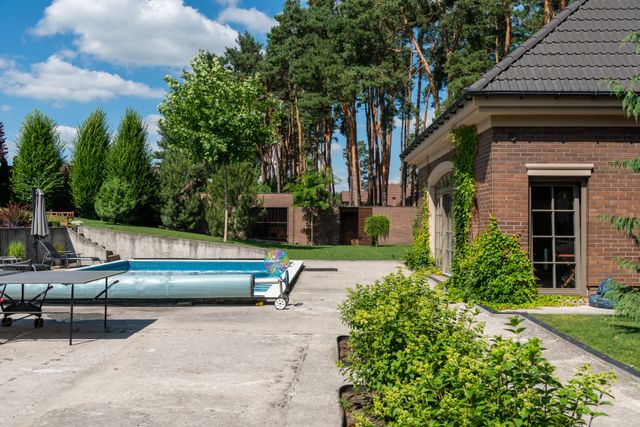
Most of the maintenance problems people blame on the tree were actually baked in at planting. Trees shoved too close together compete for water and light, which forces the lower branches to thin out, which defeats the whole point of a screen. Trees planted too far apart leave gaps that never fully close.
For most of the species discussed here, the sweet spot is spacing the trunks at roughly half the mature width of the canopy. A Green Giant that spreads to 12 feet wants six feet between trunks for a solid wall, or eight feet if you prefer each tree to retain its individual shape. Emerald Greens, narrower by design, can go three feet apart. Hornbeams fuse nicely at four to five feet.
Depth matters too. The root flare, where the trunk widens at the base, should sit at or slightly above the soil surface. Burying it under mulch or soil invites rot and encourages girdling roots that strangle the tree years later. A two to three inch mulch ring kept away from the trunk itself is the right target.
Watering through the first two years
A privacy screen is only low-effort after it’s established. During the first growing season, deep weekly watering matters more than almost anything else you do. A slow soaker hose running for an hour at the base of each tree once a week does far more than daily sprinkler passes, which only wet the top few inches of soil and train roots to stay shallow.
By the second summer, most of these species can handle normal rainfall unless there’s a prolonged drought. By year three, they’re on their own, and the real promise of a low-maintenance screen starts paying off.
Common Mistakes That Create Maintenance Headaches
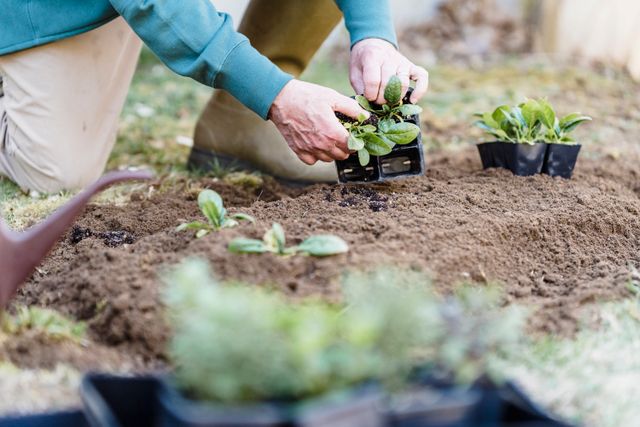
The trees themselves aren’t usually the problem. The way they’re sited, spaced, or neglected early on is what turns a supposedly easy screen into a weekend-eating project.
- Planting too close to the property line, which forces hard pruning as the canopy expands
- Ignoring utility lines overhead, which guarantees a future conflict with the power company
- Skipping soil tests in heavy clay, where root rot takes down trees one at a time
- Letting lawn grass grow right up to the trunk, which competes for moisture and invites mower damage
- Topping trees to control height, which ruins the natural shape and triggers weak regrowth
- Choosing a single species for a long run, which concentrates disease risk
Topping deserves special attention. Once you cut the leader off a Green Giant or a Leyland, the tree responds by sending up multiple weak shoots that never form a proper top. The pyramidal silhouette is gone for good, and you’ve signed up for annual shaping to keep it from looking ragged. If a tree is going to outgrow its space, the right move is to replace it with a shorter species, not to fight its genetics.
Conclusion
The best privacy trees for homeowners who don’t want to spend weekends on a ladder share a short list of traits: naturally columnar or pyramidal growth, disease resistance, tolerance for average soil, and a mature size that matches the space you’re planting them in. Green Giant arborvitae leads the pack for most of the country, Leyland Cypress still earns its keep in the right conditions, and smaller arborvitae varieties fill the gaps where a giant won’t fit.
Deciduous options and mixed plantings open up more possibilities than most homeowners realize, especially when the goal is to screen specific views rather than build an unbroken wall. The thinking you do before planting, about spacing, species mix, and site conditions, determines how much work the screen demands five years in.
Get those decisions right and the trees mostly take care of themselves. Get them wrong and no species on the market will save you from the shears. The low-maintenance promise is real, but it lives in the planning as much as in the plant tag.