
Key Takeaways
- Layered plantings with varied heights and textures create visual separation while preserving open views and attracting pollinators
- Strategic placement of screens matters far more than building one continuous barrier around the entire property
- Pergolas, slatted panels, and lattice structures filter views without creating a closed-in feeling
- Elevation changes, berms, and raised planters can block neighboring windows while leaving horizon views intact
- Water features and ambient sound help mask conversations and street noise, adding sensory privacy to visual screening
- Lighting design extends usable hours and controls what is visible from outside after dark
- Combining living elements with hardscape produces screens that mature gracefully and require less upkeep over time
Why Privacy Matters More Than Ever in Modern Yards
Spending time outside used to mean waving to the neighbors over a low chain-link fence. Those days are mostly gone. Homeowners now treat their yards as extensions of the house, with dining areas, lounge zones, hot tubs, and even outdoor offices tucked into corners that once held a swing set.
That shift has changed what people want from their landscaping. Privacy is no longer a nice-to-have. It is often the first thing on the wish list. According to the Trex survey summarized by Master Spas, more than a third of homeowners plan to make their outdoor spaces more secluded this year, and that appetite shows no signs of cooling off.
But there is a catch. Most people do not actually want a windowless box in the backyard. They want to feel tucked away without losing the sky, the treeline across the street, or the view of their own garden from the kitchen window. The challenge is finding that balance, and it is more achievable than most homeowners think.
The Problem With Tall Fences and Solid Walls
The default solution to nosy neighbors is to build the tallest fence code will allow. It sounds logical. It rarely works as well as people expect. Solid six or eight foot fences cast long shadows, create hot dead zones in summer, and make small yards feel like prison cells. They also kill views you actually enjoyed, like the oak tree three doors down or the sunset over the rooftops.
There is a functional downside too. Tall solid barriers can create wind tunnels that whip through patios on breezy days, and they often require permits, engineering, and significant expense. When the fence eventually weathers, repairing or replacing a long run becomes a major project.
The smarter approach starts with asking a different question. Instead of how do I block everything, ask what specifically do I want to hide, and from where. That reframing opens up dozens of solutions that fences alone cannot deliver.
How to Create Privacy in a Backyard Using Sightline Mapping
Before you buy a single plant or panel, walk your yard with a notebook. Sit in each spot where you actually spend time. The patio. The grill. The hammock. The hot tub. Look up, out, and around. Mark exactly which windows, decks, or streets have a direct view of you. Those are your real problem areas. Everything else is wasted effort.
This is the most important part of learning how to create privacy in a backyard without building a wall. Most sightline issues come from two or three specific angles, not the entire perimeter. Once you identify those narrow corridors of exposure, you can place small, targeted screens exactly where they matter.
Consider marking your findings with these details:
- The seating position where you feel exposed
- The specific window, deck, or vantage point causing the issue
- The approximate height of that vantage point
- The distance between you and the viewer
- Any existing vegetation or structures already in that line
With this map in hand, you can plan solutions that use a fraction of the materials a perimeter fence would require, while leaving the rest of your yard open and breathable.
The Role of Seated Eye Level
A common mistake is designing privacy from a standing perspective. When you are hosting friends on the patio, everyone is sitting. Seated eye level is usually around four feet off the ground, and a screen only needs to rise slightly above that to block views from a neighbor standing at ground level. For an elevated deck next door, you obviously need more height, but the principle remains. Design for the position you will actually be in.
Layered Planting as a Living Screen
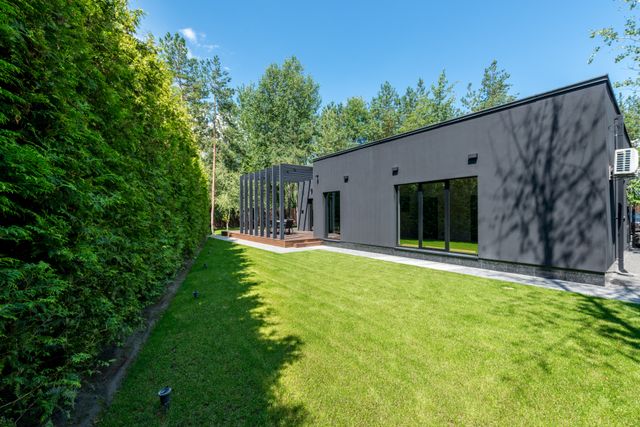
Plants are the most forgiving privacy tool because they soften edges, change with the seasons, and never feel aggressive. The trick is layering. A single row of arborvitae makes a hedge. Three staggered layers of different heights and textures makes a landscape.
Start with an anchor layer of evergreen shrubs or small trees for year-round structure. Add a mid-layer of ornamental grasses, hydrangeas, or flowering shrubs that create visual interest and seasonal change. Finish with a low layer of perennials and groundcover that ties the composition together. According to the University of Maryland Extension, landscapes with more structural variety offer greater visual appeal and support more pollinators and beneficial insects than uniform hedges.
Good candidates for mixed privacy plantings include:
- Upright junipers or cypress for narrow vertical screens
- Viburnum for dense mid-height coverage and spring flowers
- Ornamental grasses like miscanthus for summer and fall movement
- Serviceberry or dogwood for understory height with open branching
- Boxwood or inkberry holly for low evergreen structure
Layered plantings also integrate better with the rest of your outdoor living space because they feel intentional rather than defensive. Done well, they read as a garden, not a barrier.
Pergolas, Slats, and Partial Structures That Filter Views
Not every privacy solution needs to be solid or living. Some of the most effective tools are partial structures that break up sightlines without closing off the space. A pergola with a slatted roof over a dining area blocks the view from a second-story window across the fence line, while leaving the sides open to breeze and light.
Vertical slat panels work the same way at ground level. Spaced an inch or two apart, they obscure direct views from one angle while allowing you to see through at another. From inside your yard, you can still watch kids play or notice the mail carrier. From the street or a neighboring deck, the gaps visually blur and read as solid. It is a clever optical trick that fences cannot replicate.
Consider these partial-structure options:
- Freestanding slatted screens positioned beside seating areas
- Pergolas with adjustable louvers overhead
- Lattice panels threaded with climbing vines
- Decorative metal or steel privacy panels with cutout patterns
- Movable folding screens for flexible events
These structures also give you something fences cannot: architectural character. A well-designed slatted screen can anchor a patio the way a feature wall anchors a room.
Can Water Features Really Add Privacy?
Visual privacy is only half the equation. If you can hear every word your neighbors say during dinner, you will never feel truly private even behind the tallest hedge. Sound privacy is often overlooked, and it is where water features earn their keep.
A small recirculating fountain, a bubbling urn, or a small stone basin produces a steady white noise that masks conversation surprisingly well. The human ear stops tracking individual voices once a competing sound source of similar frequency enters the mix. You do not need a roaring waterfall. A gentle trickle at roughly the volume of soft rainfall is enough to blur speech from ten or fifteen feet away.
Placement matters as much as volume. Position the water feature between your seating area and the noise source, not off in a corner where its sound dissipates before it reaches you. If the issue is traffic from a nearby road, locate the feature on the road-facing edge of the patio. If the concern is a neighbor’s deck, place it along that property line.
Other sound-adding options worth considering:
- Wind chimes tuned to low, mellow tones rather than tinkling highs
- Rustling plants like bamboo, quaking aspen, or tall grasses near seating
- Outdoor speakers playing ambient music at low volume during gatherings
- Dense evergreen plantings that absorb rather than reflect sound
Combine two or three of these and the acoustic cocoon becomes surprisingly convincing, even in dense neighborhoods.
Using Elevation, Berms, and Raised Planters
Topography is one of the most underused privacy tools in residential design. A gentle berm just two or three feet high, planted with shrubs and grasses, can block views from a neighbor’s ground-floor windows while keeping your horizon wide open. Because the berm itself does part of the work, the plants on top do not need to be as tall, which keeps the overall look relaxed rather than imposing.
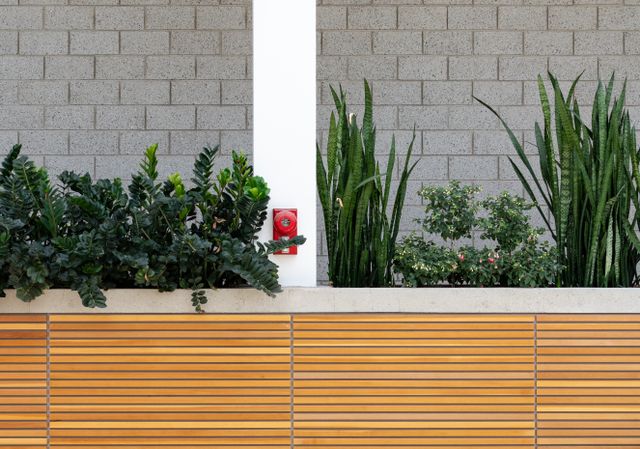
Raised planters perform the same function on patios and decks where you cannot shape the ground itself. A twenty-four inch planter filled with boxwood or dwarf pines effectively adds two feet of screen height without the visual weight of a wall. On a deck, this is often the difference between feeling on display and feeling tucked in.
Elevation changes also help carve a yard into distinct zones. A sunken patio feels sheltered simply because the surrounding ground is higher. A raised dining platform brings guests closer to the canopy of nearby trees, which can shield views from above. These moves are especially useful on sloped lots, where fighting the grade is expensive and awkward anyway. Working privacy into a thoughtful low-maintenance backyard design means letting the land do some of the heavy lifting instead of layering structure on top of it.
When Berms Make More Sense Than Fences
Berms shine in situations where a fence would feel heavy-handed, like front yards, open suburban lots, or properties with HOA restrictions on fence height. They also handle stormwater better than a hard barrier, absorbing runoff rather than redirecting it toward the neighbor’s lawn. The initial soil work is the main expense; after that, the planting investment is comparable to any other bed.
Lighting Strategies That Shape What Others See
Privacy during daylight is one problem. Privacy after dark is another, and lighting is the lever most homeowners never think to pull. A brightly lit patio surrounded by dark yard becomes a glowing stage visible from every window in the neighborhood. Flip the script, and you can disappear.
The principle is straightforward. Light the edges of your space, not the center. Downward-facing fixtures along the property line, uplights washing a far hedge, or soft path lighting along the perimeter all pull the eye outward while leaving your seating area in comfortable shadow. Anyone looking in from outside sees the illuminated edge first, and their eyes never adjust enough to clearly see past it.
Useful techniques include:
- Low-voltage downlights mounted in trees pointing at the ground
- Uplights on screening shrubs to create a glowing wall of foliage
- Candles, lanterns, or shielded table lamps for ambient seating light
- Avoiding any bright overhead fixture that casts light straight down on the patio
- Warm color temperatures around 2700K rather than cool white
Dimmers are the quiet hero of outdoor lighting. Being able to drop the intensity as the evening progresses lets you match the light level to the privacy level you want at any moment.
Combining Hardscape and Living Elements
The best privacy designs rarely rely on a single material. A freestanding slat wall looks striking on its own, but pair it with a climbing hydrangea or a row of tall grasses in front, and it reads as part of the garden rather than a construction element. A berm with just shrubs feels like a hedge; add a short section of stone wall and a small tree, and it becomes a landscape feature.
This blending matters because living elements grow, change, and occasionally fail, while hardscape stays put. Combining them gives you insurance. If a shrub dies or takes three seasons to fill in, the structural element behind it is already doing part of the job. Once the planting matures, the hardscape recedes visually, letting the greenery take over as the dominant texture.
Look for opportunities to pair:
- Masonry walls with ornamental grasses or flowering perennials
- Slatted wood screens with evergreen vines like clematis armandii
- Steel privacy panels with soft perennial borders at the base
- Pergola posts with espaliered fruit trees trained along cables
- Stone pillars flanking shrub beds to frame a view intentionally
These combinations tend to age well. Instead of looking tired after ten years, they tend to look better as plants reach their mature form and soften every hard edge.
Maintenance Considerations for Long-Term Privacy
A privacy plan that looks great on install day but demands constant upkeep will eventually get neglected, and neglected screens are worse than no screens at all. Think about maintenance from the beginning. Choose plants that reach the height you need naturally, rather than species you will have to shear twice a season to keep in bounds. A shrub that wants to be ten feet tall will fight you forever if you try to hold it at six.
Wood structures benefit from durable species like cedar, black locust, or thermally modified lumber that resist rot without annual sealing. Metal panels in powder-coated aluminum or weathering steel essentially maintain themselves. Even water features can be designed with larger reservoirs and simpler pumps that require less frequent attention.
A few maintenance-friendly habits worth building in:
- Mulch generously under screening plants to reduce weeding and watering
- Install drip irrigation to privacy beds from the start, not as an afterthought
- Choose self-cleaning water features with covered basins
- Pick lighting fixtures with easily replaceable LED modules
- Leave access paths behind screens so you can reach them for pruning
Privacy that quietly takes care of itself is the kind you still enjoy a decade later.
Conclusion
Creating a sense of seclusion in a yard is not about building the biggest barrier you can afford. It is about understanding exactly where you feel exposed, then addressing those specific sightlines with the lightest touch that gets the job done. Layered plantings, partial structures, berms, water, and thoughtful lighting each solve part of the puzzle, and together they produce a space that feels sheltered without feeling closed in.
The homeowners who get this right tend to work in stages. They start with a sightline map, add one or two targeted interventions, live with the results for a season, and refine from there. That iterative approach almost always produces a better outcome than a single big project, because the yard reveals its real problem areas over time and your solutions can evolve with the space.
Done thoughtfully, privacy becomes invisible. Guests do not notice the screens, the berms, or the carefully placed fountain. They simply feel comfortable, settled, and tucked away from the rest of the world, which is exactly the point.